
Retrieval of biological material
Article
|Last update
The Biobank handles the retrieval of biological material from health surveys and from research projects that store biological material at the Biobank.
The department has both manual and automated methods for retrieval. The type of biomaterial and volume are important factors in determining which method is used.
Requests and applications for the retrieval of biological material are registered in a combined retrieval queue form. The biobank contacts the project when their retrieval is next in line and provides an estimate of when the biological material can be delivered.
Certain circumstances may cause delays in the delivery of the material. Examples include significant changes after the biobank has started the retrieval process, or waiting for clarifications related to questions about the request.
Retrieval of biological material from health surveys, including MoBa
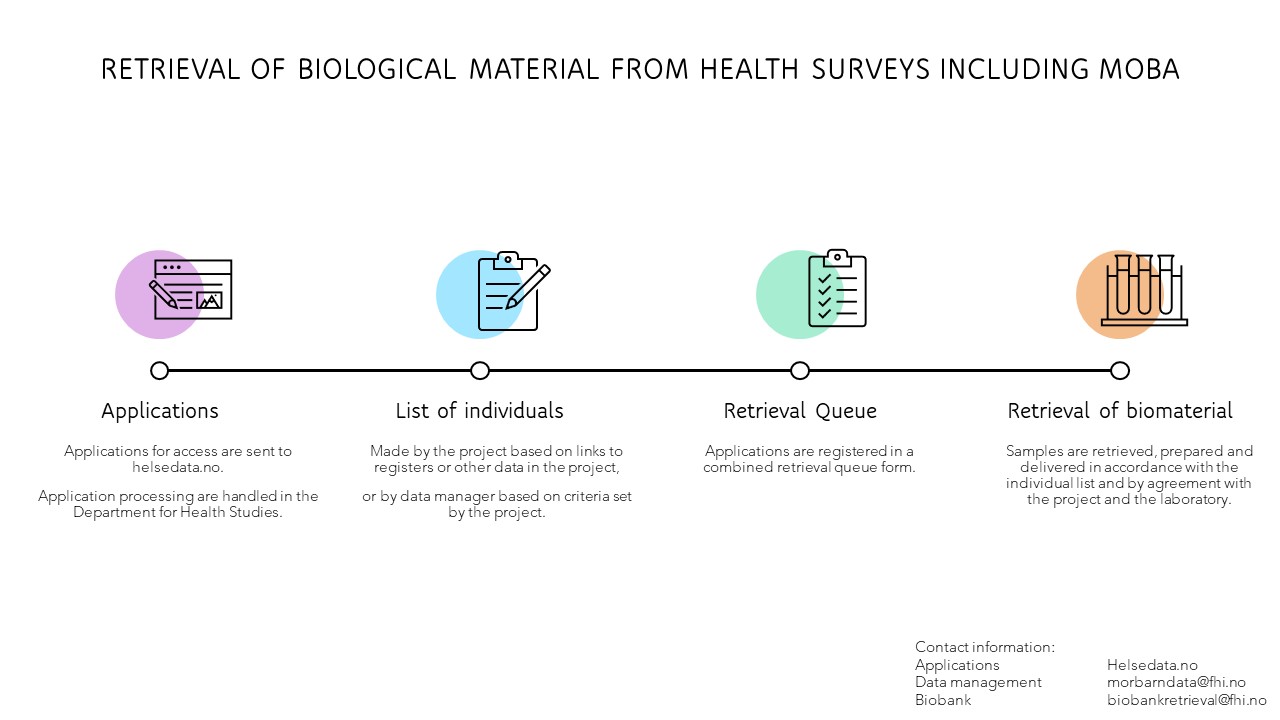
Applications for retrieval of biological material from health surveys are registered in the retrieval queue form when the application is approved.
The biobank uses the completed Biological material form that was submitted with the application when working in the retrieval. If there are any unclear points in the form or if other clarifications are needed, the biobank will contact the project directly.
When the retrieval is next in line, the biobank will send a Material Transfer Agreement (MTA) to the project. This must be signed by the project leader and returned. The project is responsible for making agreements with the laboratories that will analyse the biological material. The laboratories must follow the terms described in the MTA.
Read more about access to biological material from MoBa and the requirements for the analysis laboratory here:
Retrieval of biological material from research projects that store biological material at the Biobank
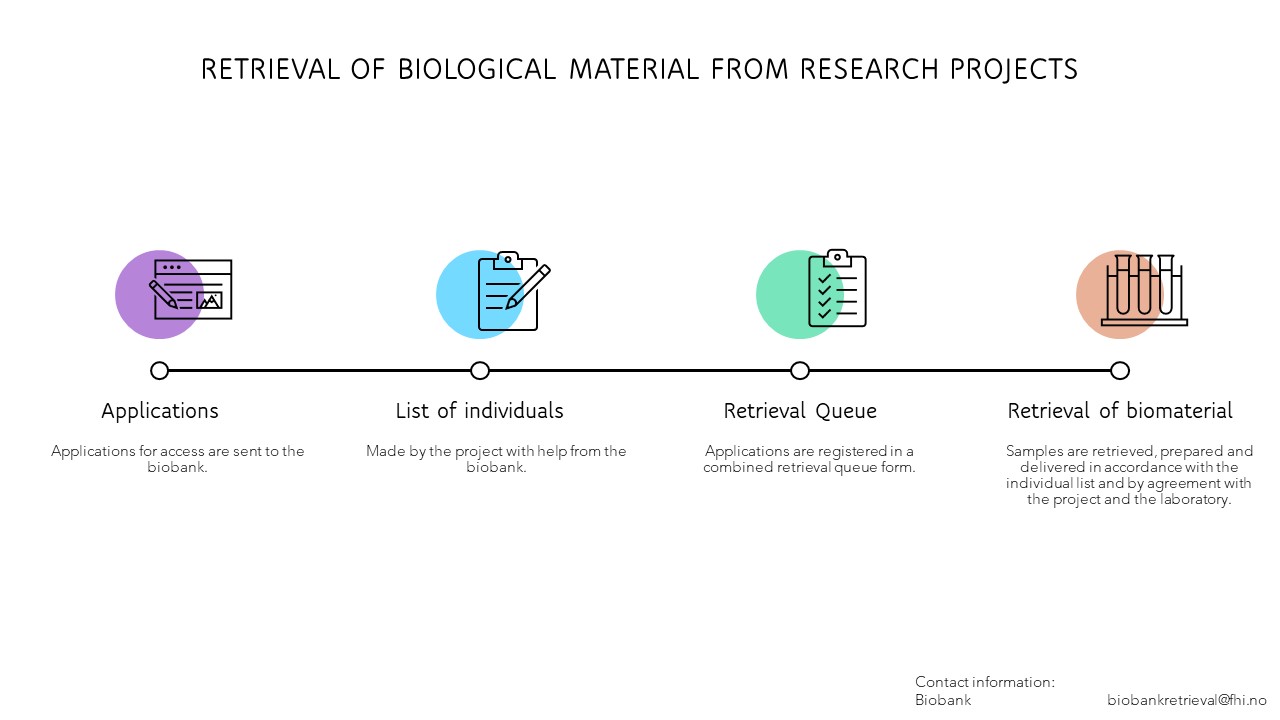
Requests for retrieval of biological material from research projects that store material in the biobank are registered in the retrieval queue form when the biobank has received a completed criteria form/retrieval form. The completed form can be sent to: biobank-bioretrieval@fhi.no
Criteria form/retrieval form can be downloaded here (only in Norwegian):
Price of the retrieval
The price for the retrieval of biological material is estimated based on expected working hours and equipment/consumables. The Biobank can give a estimate of the price when an application is received and approved. The price will depend on the number of samples, volume/concentration, type of biomaterial and the complexity of the desired set-up.
Table 1 shows examples of price estimates for health surveys (including MoBa) and research projects for standard delivery. For standard delivery of biological material, the samples are randomised and delivered on fixed/solid trays (deep well, semi deep well or microtiter/PCR).
Included in the standard delivery:
- Working time
- Equipment/consumables
- Randomized sample set-up
- Delivery on fixed/solid trays (deep well, semi deep well or microtiter/PCR)
Not included in the standard delivery:
- Specific layout in the trays
- Other types of tubes and/or trays
- Shipment to the analysis laboratory
If the project wants a specific layout, different trays or has other needs, this must be specified in the request/application. This could result in an increased price.
|
|
Number of samples |
Type of material |
Estimated price (NOK) |
|
Health surveys including MoBa |
200 |
DNA |
115 000 |
|
200 |
Plasma |
105 000 |
|
|
1000 |
DNA |
210 000 |
|
|
1000 |
Plasma |
220 000 |
|
|
Research projects that store biological material at the Biobank |
200 |
DNA |
50 000 |
|
200 |
Plasma |
50 000 |
|
|
1000 |
DNA |
100 000 |
|
|
1000 |
Plasma |
105 000 |
Factors that may result increased working hour and thereby increased price:
- Small number of samples (<100 samples)
- Specific study design regarding diagnoses
- Fixed positions in retrieval trays
- Matrix tray (0.5, 0.75 or 1.4 mL)
- Samples aliquoted into several trays
- Manual pipetting for aliquoting (for example for whole blood)
The project will be invoiced for delivery and shipment when the samples have been sent from the biobank.