Information about MoBa-samples in the biobank
Article
|Last update
Collection of flow charts, sample overview and number of total samples in biobank.
Sampling timepoint and number of stored samples in the biobank for the MoBa cohort
*For K12, one extra whole blood tube, plasma EDTA tube and urine tube have been collected.
* Additional blood tubes and urine collected at week 17th - 20th of pregnancy, referred to as K12. Purpose use was measurement of environmental exposures during pregnancy.
** DNA concentration of approximately 100 ng/µl.
*** Capillary sampling were performed on approximately 1,5% of the children.
Children with capillary samples collected one day or more after the day of birth - 1192 children.
Children where the capillary sample was collected the day of birth - 184
Children where the time of capillary sampling is not certain - 14 children.
Concerning plasma samples
The plasma samples were originally frozen at -80 degrees Celsius in 96-well plates sealed with a foil. When the samples are retrieved for scientific analysis, the plate is thawed and the foil is removed. Although the procedure is carefully performed, it has nevertheless led to a risk of transferring small amounts of plasma from one well to another. The samples are now frozen at -80 degrees Celsius in separate Matrix tubes. For a discussion about the consequences this has for a specific project, contact the biobank at Biobank-BioRetrieval@fhi.no.
Haemolysis of plasma samples
| Sample type | Gradering | Number of Samples |
| Child | Yellow | 7652 |
| Child | Light Orange | 35061 |
| Child | Orange | 27216 |
| Child | Red | 8976 |
| Child | No grading | 12814 |
| Pregnant Woman | Yellow | 81685 |
| Pregnant Woman | Light Orange | 2538 |
| Pregnant Woman | Orange | 385 |
| Pregnant Woman | Red | 46 |
| Pregnant Woman | No grading | 14256 |
| Woman during birth | Yellow | 73858 |
| Woman during birth | Light Orange | 2180 |
| Woman during birth | Orange | 391 |
| Woman during birth | Red | 130 |
| Woman during birth | No grading | 10174 |
| Father | Yellow | 59081 |
| Father | Light Orange | 4313 |
| Father | Orange | 363 |
| Father | Red | 48 |
| Father | No grading | 9217 |
Number of samples
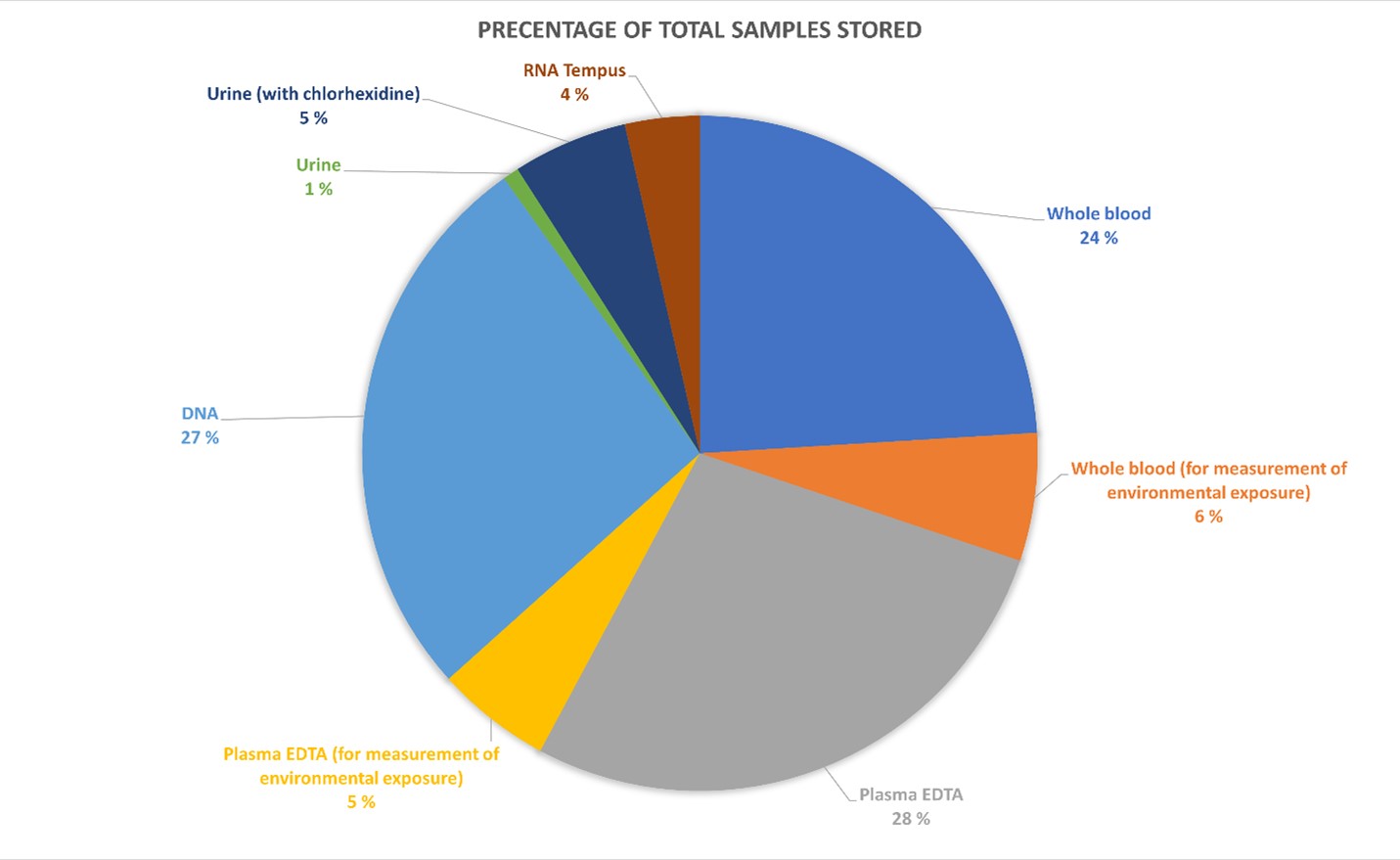
The biobank department at NIPH stores approximately 1.3 million individual samples from the MoBa participants. Further, the individual samples are alliquoted into several vials depending on the samples type. Figure 1 shows the percentage of the total amount of samples divided by sample types.
Samples in the different projects and participant
Including the main cohort design, biological sample collection for specific projects within the MoBa cohort was conducted. These samples were collected for specific research purposes. Table 3 gives an overview of the different projects and participant, including the different sample types and number of collected samples. More information about the different research purposes of the projects can be found at the specific project/substudy pages.
|
Project |
Collection period |
Participant |
Quantity Sample Sets |
Type of material |
Number of samples |
|
Reliability* |
2007-2008 |
Mother week 17* |
735 |
DNA |
732 |
|
Whole blood |
730 |
||||
|
Whole blood (original tube) |
726 |
||||
|
Plasma (transferred by sampling) |
728 |
||||
|
Plasma (transferred by the Biobank) |
728 |
||||
|
Urine |
721 |
||||
|
Mother week 23 |
732 |
DNA |
590 |
||
|
Whole blood |
712 |
||||
|
Whole blood (original tube) |
729 |
||||
|
Plasma (separated shortly after sampling) |
716 |
||||
|
Plasma (separated by the biobank) |
725 |
||||
|
Urine |
731 |
||||
|
Mother week 29 |
709 |
DNA |
457 |
||
|
Whole blood |
696 |
||||
|
Whole blood (original tube) |
697 |
||||
|
Plasma (separated shortly after sampling) |
699 |
||||
|
Plasma (separated by the biobank) |
709 |
||||
|
Urine |
702 |
||||
|
ABC |
2005-2012 |
Children |
903 |
DNA |
869 |
|
Whole blood |
680 |
||||
|
Plasma |
880 |
||||
|
Mother |
34 |
DNA |
30 |
||
|
Whole blood |
34 |
||||
|
Plasma |
31 |
||||
|
Father |
48 |
DNA |
46 |
||
|
Whole blood |
47 |
||||
|
Plasma |
44 |
||||
|
Language 8 |
2014 |
Children |
640 |
DNA |
640 |
|
Mother |
504 |
DNA |
504 |
||
|
Father |
367 |
DNA |
367 |
||
|
Bra pust (Asthma project) |
2013 |
Children |
454 |
DNA |
450 |
|
Plasma |
447 |
||||
|
Serum |
451 |
||||
|
Norwegian Environmental biobank** |
2016-2017 |
Mother |
662 |
Whole blood |
661 |
|
Cons. red blood cells |
656 |
||||
|
Plasma |
657 |
||||
|
RNA |
577 |
||||
|
Serum |
655 |
||||
|
Urine |
659 |
||||
|
Father |
502 |
Whole blood |
501 |
||
|
Cons. red blood cells |
496 |
||||
|
Plasma |
496 |
||||
|
RNA |
426 |
||||
|
Serum |
497 |
||||
|
Urine |
500 |
||||
|
Children |
669 |
Whole blood |
671 |
||
|
Cons. red blood cells |
658 |
||||
|
Plasma |
603 |
||||
|
RNA |
575 |
||||
|
Serum |
657 |
||||
|
Urine |
667 |
||||
|
2024-2025 |
Mother |
1 206 |
Whole blood |
1 206 |
|
|
Cons. red blood cells |
1 187 |
||||
|
Plasma |
1 200 |
||||
|
Serum |
1 201 |
||||
|
Urine |
1 203 |
||||
|
Father |
646 |
Whole blood |
646 |
||
|
Cons. red blood cells |
636 |
||||
|
Plasma |
644 |
||||
|
Serum |
643 |
||||
|
Urine |
641 |
||||
|
Children |
747 |
Whole bloods |
747 |
||
|
Cons. red blood cells |
727 |
||||
|
Plasma |
734 |
||||
|
Serum |
736 |
||||
|
Urine |
736 |
||||
|
MoBa Covid 19 |
2020 |
Mother |
3 586 |
DNA |
3 550 |
|
Plasma |
2 640 |
||||
|
Father |
2 901 |
DNA |
2 875 |
||
|
Plasma |
2 096 |
||||
|
Children |
2 903 |
DNA |
2 870 |
||
|
Plasma |
2 058 |
||||
|
2021 |
Mother |
744 |
DNA |
744 |
|
|
Plasma |
742 |
||||
|
Father |
627 |
DNA |
627 |
||
|
Plasma |
627 |
||||
|
Children |
767 |
DNA |
766 |
||
|
Plasma |
763 |
||||
|
2023 |
Mother Long Covid |
163 |
DNA |
163 |
|
|
Plasma |
163 |
||||
|
Far Long Covid |
108 |
DNA |
108 |
||
|
Plasma |
108 |
||||
|
Young Women's Health and Fertility |
2022-2025 |
Woman (18-27 years) |
855 |
DNA |
789 |
|
Whole blood |
837 |
||||
|
Plasma |
818 |
||||
|
Urine |
837 |
||||
|
RNA |
847 |
||||
|
Young Men's health and Fertility |
2024-2025 |
Men (18-27 years) |
223 |
DNA |
135 |
|
Whole blood |
217 |
||||
|
Plasma |
177 |
||||
|
Urine |
209 |
||||
|
RNA |
215 |
||||
|
Sperm |
218 |
||||
|
New life |
2025 |
Woman before pregnancy* |
38 |
Whole blood with Tasso kit (filter paper) |
38 |
|
2025 |
Woman |
8 |
DNA |
7 |
|
|
Whole blood |
8 |
||||
|
Plasma |
8 |
* Special conditions may apply. Contact MoBa for more information.
** Special conditions will apply. See About The Norwegian Environmental Biobank for more information.
The process from sample collection to biobank storage for all sampling timepoints
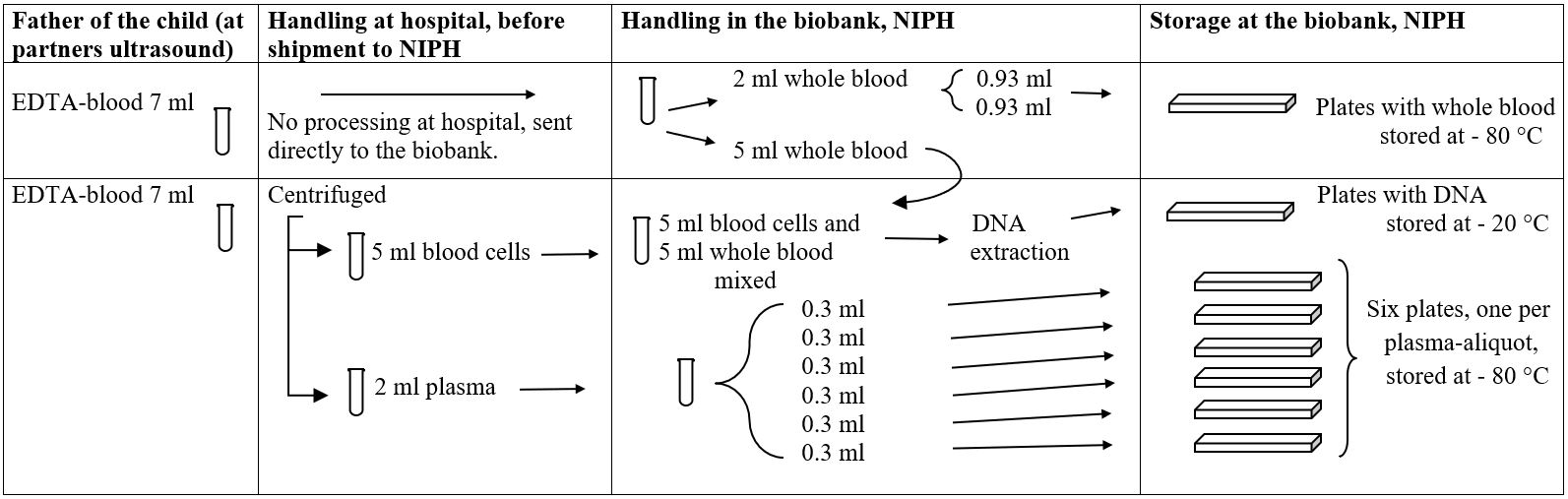
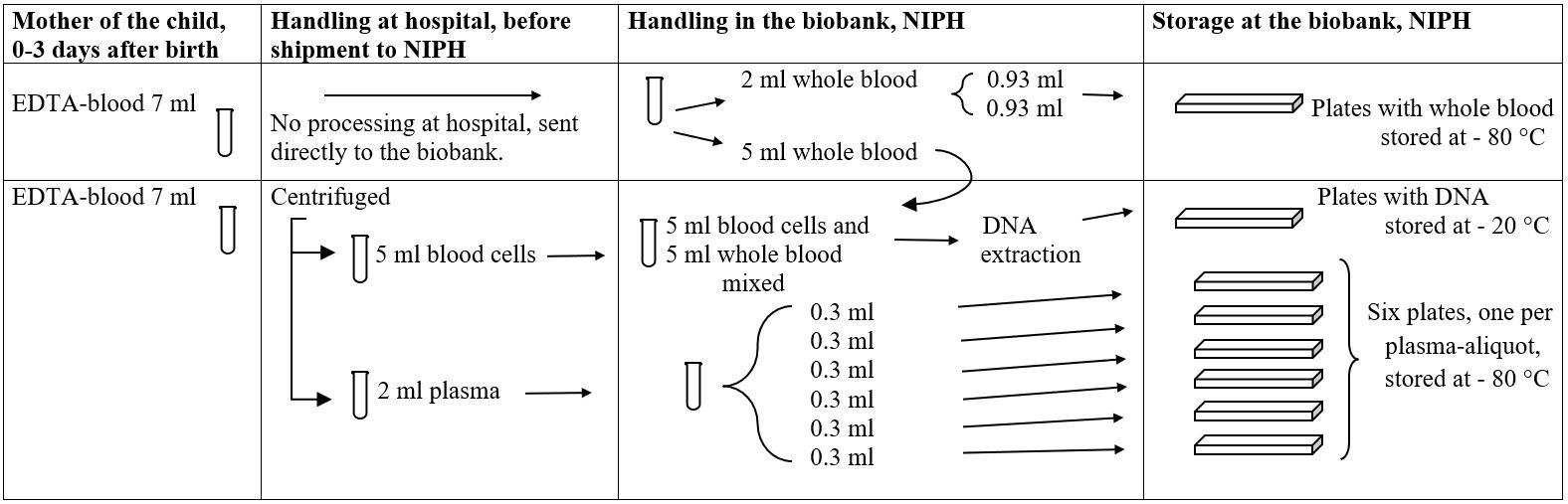
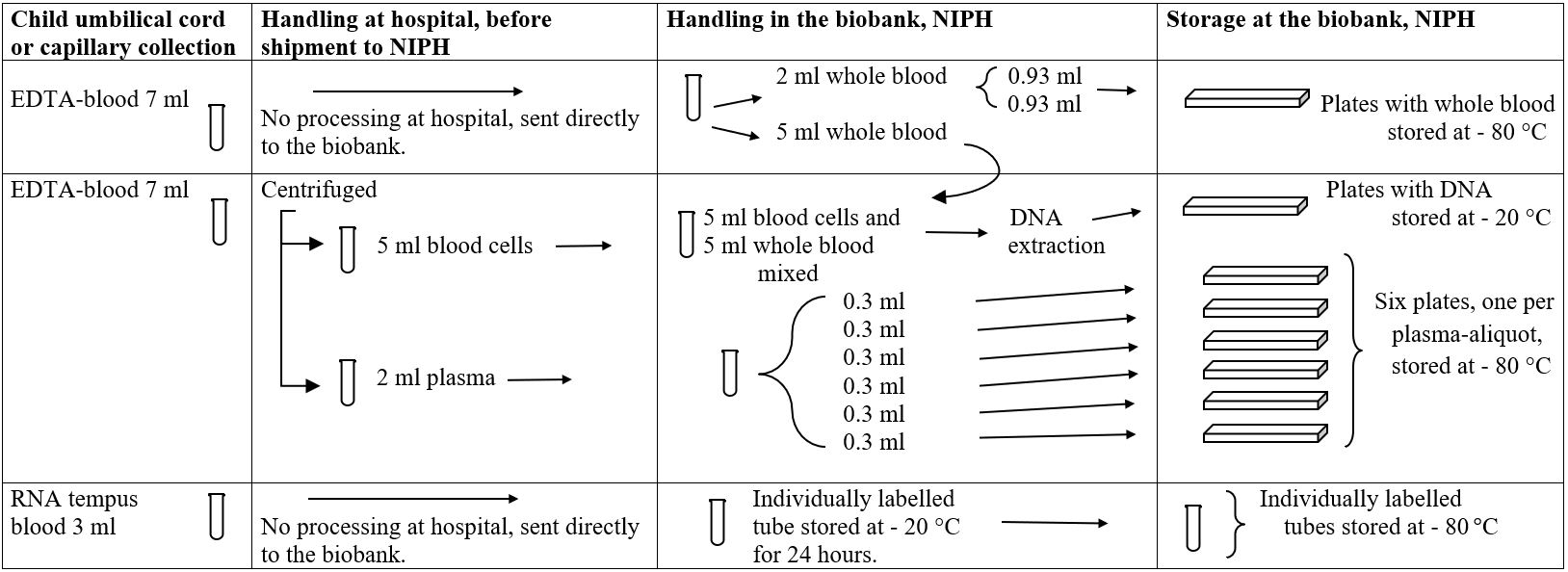
The flow charts (figure 2- 5) describe the process from sample collection to biobank storage for all sampling timepoints.
There are three main timepoints where biological material was collected in the MoBa study design. First was the collection from the pregnant women and the fathers of the child. This was done at week 17th – 20th of pregnancy at the planned ultrasound visit. A few years into the sample collection, the MoBa study received founding for a specific collection purpose. Two additional blood tubes and a urine sample was added to the collection from the pregnant women. The purpose was to measure environmental exposures during pregnancy. The whole blood was collected and stored anaerobe. These samples are referred to as K12. The fathers were invited to participate a few years after the collection from the mothers had begun.
The second timepoint was after birth. Biological material from the newborn child was collected from the umbilical cord or, in some cases, collected capillary from the child. A new sample collection from the mothers was also carried out 0-3 days after birth.
The third was the collection of child primary teeth. This was carried out when the children were 6-7 years old. There are approximately 35 000 collected teeth. These are stored at the Department of Clinical Dentistry (IKO) at the University of Bergen. More information can be found at the MoBaTooth webpage.
Apart from the teeth, all biological material from the MoBa collection is stored at the biobank at Norwegian institute of public health (NIPH). Aliquots of whole blood, plasma and urine are stored at ultra-freezers and/or in the automatic storage unit at - 80 °C. Aliquots of DNA and one tube of whole blood are stored at freezers and/or in the automatic storage unit at – 20 °C. The RNA Tempus tubes collected from the child’s umbilical cord, or capillary from the newborn child, were first stored at -20 °C for 24 hours. They were later moved to - 80 °C ultra-freezers for long term storage.
One smaller tube of EDTA-blood, collected from the pregnant women, were frozen directly in the original tube. The RNA tempus tube, collected from the child, were also frozen in the original tube. Otherwise, the samples were divided to smaller aliquots before long term storage. After the DNA extraction from both whole blood and concentrated blood cells, the DNA was divided to aliquots of 100 ng/µl.