
Building Stronger Public Health Institutions and Systems (BIS) in Ethiopia
Last update
The overarching objective of BIS is resilient health systems that address population needs by contributing to stronger national (and regional) public health institutions.
BIS collaboration in Ethiopia Phase 2
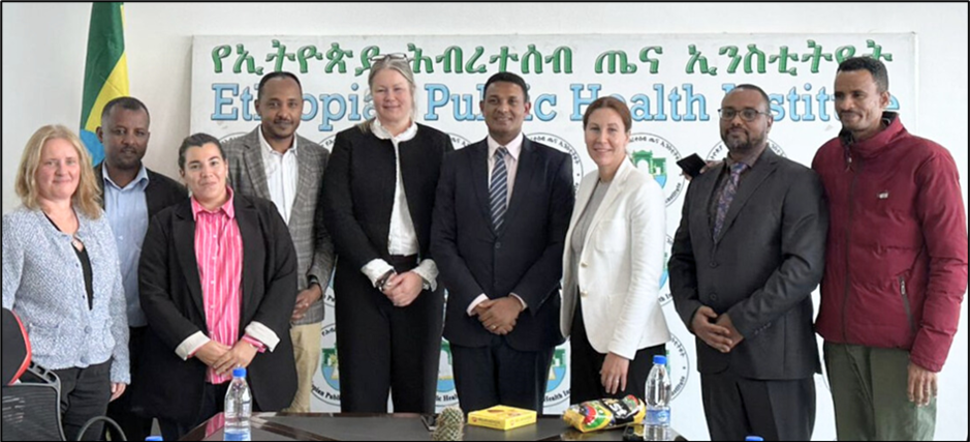
Under the Norad-funded programme Building Stronger Public Health Institutions and Systems (BIS) programme phase 2, NIPH will continue the long-term collaboration with the Ethiopian Public Health Institute (EPHI).
The BIS programme in Ethiopia
NIPH has worked with Ethiopian institutions and universities for many years, mainly on research and infectious diseases. The current collaboration with EPHI was initiated, through IANPHI, in 2019, with EPHI becoming a formal partner in the BIS programme phase 1 from 2022-2025. The current phase, BIS 2, started in September 2025 and lasts until the end of 2029.
The BIS collaboration consists of peer-to-peer support, referred to as twinning, and cooperation. The conditions in Ethiopia and Norway are different, however the mandate to deliver essential public health functions is similar. The representatives in the partner institutions are therefore in a good position to support each other.
Main aims of BIS in Ethiopia
The collective aim of the BIS 2 Collaboration in Ethiopia is to establish systematic practices for the collection of high-quality information, promote the use of data for health research, strengthen infectious disease preparedness and response, and enhance evidence uptake for decision-making. This will be achieved through collaborative knowledge exchange and twinning efforts with the Ethiopian Public Health Institute (EPHI), and other partners.
The focus areas of this collaboration are:
BIS Phase 1 laid a strong foundation for evidence-based collaboration and capacity building. Phase 2 will deepen institutional partnerships for strengthening climate and health research, and support the next generation of public health scientists in Ethiopia.
Under the focus area of Climate and Health NIPH is supporting the development of a Climate, Nutrition and Health Hub engaging all division at EPHI, with the aim of facilitating evidence-based decision making, promote knowledge sharing and enhance capacity building to address urgent climate sensitive public health issues.
Another component under this focus area is the generation of local evidence of the relationship between environmental and climate-related risks with health impacts as well as the uptake of high-quality evidence in decision making for health system strengthening.
Under the focus area of infectious disease, NIPH will be supporting capacity building in areas such as molecular epidemiology, antimicrobial resistance (AMR) and biosafety and biosecurity. The initiative also aims to strengthen the health information system and make use of DHIS2. EPHI central staff and other relevant stakeholders will receive training to be equipped to build capacity and provide support to regional offices.
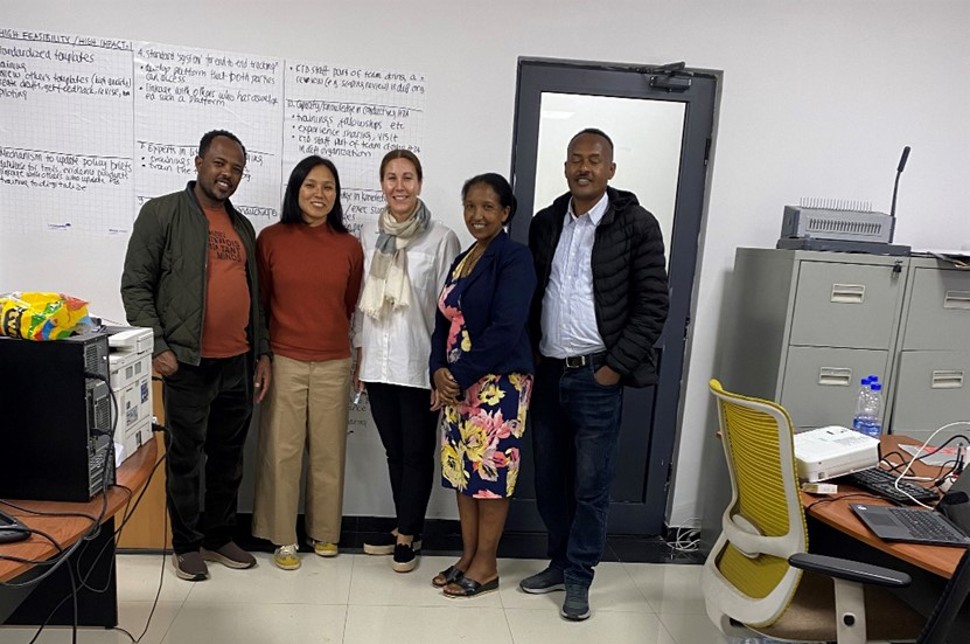
Under the focus area of knowledge translation by promoting the use of evidence-based policymaking by scaling up the conduct and dissemination of evidence synthesis in public health, enhancing capacity for evidence synthesis, strengthening uptake for decision making through collaborative knowledge exchanges, and collaborating with similar professionals at other public health institutes. This includes exploring opportunities to support the establishment and development of a Climate and Health Knowledge Hub, which can generate high-quality, timely evidence to inform public health decision-making on climate-sensitive health risks.
Collaboration Partners
Ethiopian Public Health Institute (EPHI) established in 1922 and with more than 1000 employees, is a well-established institute and continues to be the main partner in BIS phase 2. EPHI has the mission to improve the health status of the Ethiopian population through promoting effective public health emergency management; building sustainable and resilient laboratory system; undertaking research on priority public health and nutrition issues; emplacing digital health data repositories, and health information systems; conducting capacity building and creating enabling environment for best public health interventions.
Main achievements in BIS Ethiopia phase 1
The first phase of the BIS Ethiopia collaboration between the Norwegian Institute of Public Health (NIPH) and the Ethiopian Public Health Institute (EPHI) focused on strengthening institutional capacity, advancing environmental health research, and fostering collaboration on climate and health.
The EthAir Project: Air Pollution and health in Ethiopia
- Conducted a nationwide survey of over 20,000 households on energy use and household environments.
- Presented findings at the ISEE 2022 Conference and advanced PhD training through coursework and international exchanges.
- Identified key datasets to model disease burden from household air pollution (scientific manuscripts in progress).
- Initiated local air quality monitoring capacity, using low-cost sensors and hands-on technical training at EPHI.
Knowledge Exchange, Expanding Networks and Research Opportunities
- Secured three major Horizon Europe projects:
- ENABLE – promoting healthy lifestyles and cleaner environments in Ethiopian cities.
- BRIDGE NETWORK – strengthening African–European capacity in health informatics and infectious disease research.
- Linda-Familia - Implementation of an Integrated Digital Health System for Infectious Diseases in Maternal and Child Health In East Africa
- Supported training in R programming, environmental epidemiology, climate–health data analysis, and EU project management and organized climate and health seminars to connect national and global partners.
NIPH Collaborative Team
- Technical lead climate and health: Eleni Papadopoulou
- Technical support climate and health: Shilpa Rao-Skirbekk, Geir Aamodt (NMBU), Sonja Lynn Myhre and Per Schwarze
- Technical lead infectious diseases: Siri Laura Feruglio
- Technical support infectious diseases: Nina Handal (AMR) and Mohammed Umaer Naseer (molecular epidemiology)
- Technical lead knowledge translation: Rigmor Berg
- Technical support knowledge translation: Bianca Lay
- Country Coordinator: Silje Gunlaug Yun Eng