
Promoting Responsiveness and Equity for Primary Health Care Decisions through Voice (ProtEqt Voice)
ProtEqt Voice is a research project exploring how public participation can strengthen transparency, equity and responsiveness in primary health care decision-making.
About the project
-
Project period: 01.04.2025 - 31.03.2028 (Active)
- Coordinating Institution: Norwegian Institute of Public Health
-
Project Manager:
- Elina Dale, Global Health
-
Project Participants:
- Benjamin Tsofa, Kenya Medical Research Institute
- Elizabeth Peacocke, Global Health
- Unni Gopinathan, Centre for Epidemic Interventions Research
- Marit Johansen, Global Health
- Aurelia India Neumark, Researc Administrative Support
- Nancy Kagwanja, Kenya Medical Research Institute
- Joshua Munywoki, Kenya Medical Research Institute
- Anita Musiega, Kenya Medical Research Institute
- Jacinta Nzinga, Kenya Medical Research Institute
- Peter John Binyaruka, Ifakara Health Institute
- August Kuwawenaruwa, Ifakara Health Institute
- John Joseph Maiba, Ifakara Health Institute
- John Kinuthia, Bajeti Hub
- Abraham Rugo, Bajeti Hub
- Kipkorir Biegon, Bajeti Hub
- Bianca Lay, Global Health
Summary
The primary aim of the project is to generate evidence and tools that inform and support the design and assessment of participatory mechanisms to achieve responsive and equitable primary health care (PHC) decisions. The specific objectives are to:
- Explore how contextual factors influence the effectiveness of participatory approaches and map relevant legal mechanisms.
- Collaboratively design and test transparent and inclusive participatory processes for PHC decisions in Kenya and Tanzania.
- Create a novel progression model for assessing transparency, participation and inclusive PHC decisions.
Why strong primary health care, and citizen voices, matter
Strong PHC saves lives and money: evidence shows that PHC, rooted within communities and the first level of healthcare contact for a population, improves health outcomes, reduces the access gap between rich and poor, and contributes to better use of resources. However, particularly in low-and middle-income countries, PHC services are underfunded, and patients often have to pay out-of-pocket to receive basic services.
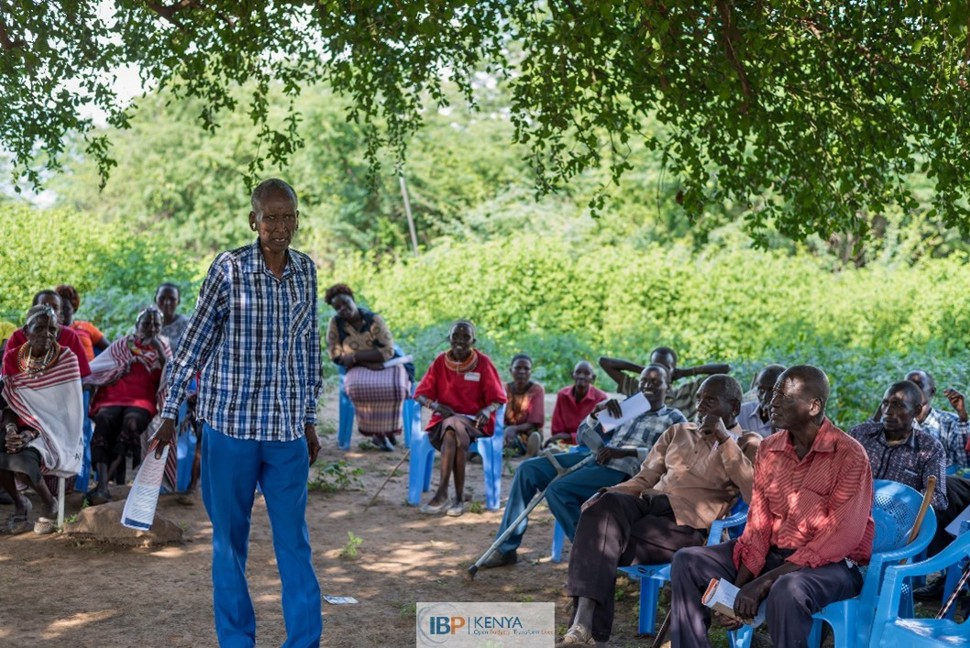
ProtEqt Voice strengthens PHC by putting people’s voices at the centre of budgeting decisions. The project links with a promising initiative led by Bajeti Hub Kenya where budget cafés, a type of town hall meeting, are run to promote budget transparency and public engagement on how governments raise and spend money. Working in Kenya and Tanzania with KEMRI Wellcome Trust, Ifakara Health Institute, Bajeti Hub, and the University of Bergen (BCEPS), the project will deliver practical tools and evidence for more transparent, inclusive, and equitable PHC decisions.
What ProtEqt Voice will do
The project is divided into three work packages that address key knowledge gaps related to the role of public participation in decision-making related to PHC.
ProtEqt Voice will:
- Synthesize evidence to clarify what works, for whom, and under which circumstances does public participation in primary health care financing decision-making processes shape equity of outcomes and responsiveness to community needs (WP1)
- Develop and test transparent, inclusive participation processes for PHC in Kenya and Tanzania, including innovative formats such as budget cafés (WP2)
- Create a progression model to track transparency, participation, and inclusiveness in PHC decision-making (WP3)