
Annual I4C meeting in Goyang, Korea
Article
|Published
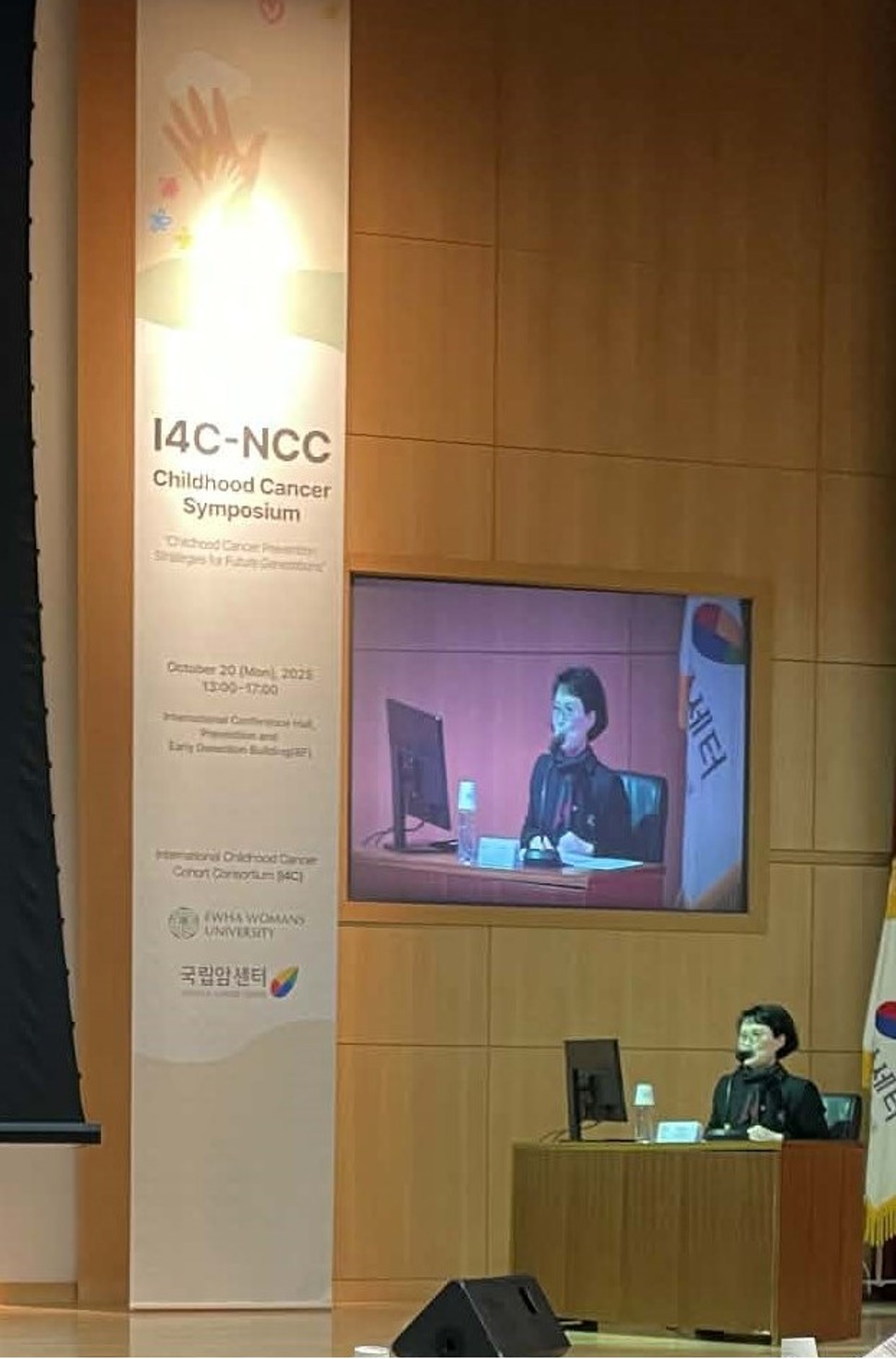
The National Cancer Center (NCC) of Korea hosted a successful and well-attended 2-day symposium in October 2025, organized by professor Eunhee Ha and her staff.
Attendance and activities
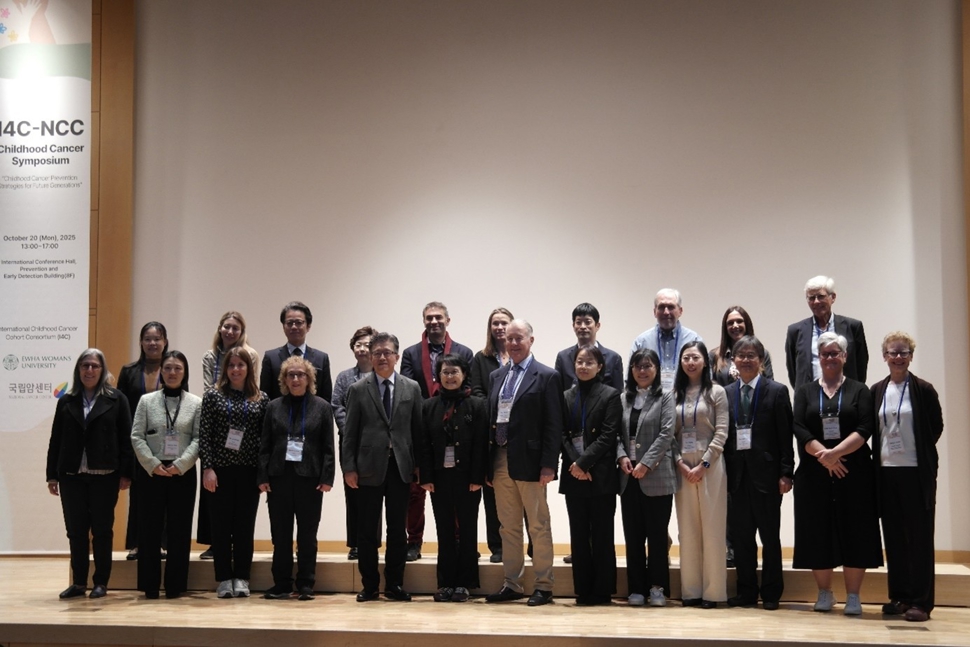
More than 50 participants attended worldwide, both online and onsite. Overview of activities in NCC were given together with strategies for preventing childhood and adolescent cancer, early-life exposures in sensitive windows versus later cancer, as well as germline mutations in pediatric cancers
The Pacific and East Asian region
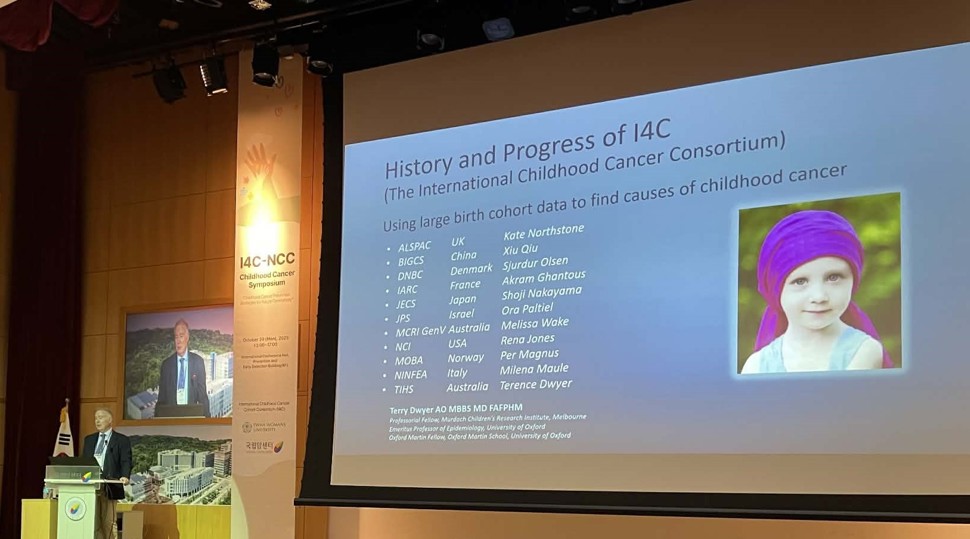
The meeting included presentations of three birth cohorts that have joined I4C recently: the Korean Children’s Environmental Health Study (Ko-CHENS), the Guangzhou Cohort Study (BIGCS) in China, and the Generation Victoria (GenV) in Australia. In addition, ongoing birth cohorts in Taiwan, Shanghai, and Singapore were presented. Details of exposure measurements in Ko-CHENS and in the Japan Environment and Children’s Study (JECS) supplemented the presentations of research activities in East Asia and Australia. Terry Dwyer presented the history and progress of I4C, pointing out the new opportunities provided by the inclusion of the new cohorts.
Adolescents and young adults
An important new feature of I4C is the decision to include cancers that have their debut in adolescence and young adulthood. Presentations by Martha Linet and Ora Paltiel displayed the many sub-projects that can be set up in I4C to understand the potential causal relations between pre- and perinatal factors and adolescent and early adult cancers. Melissa Wake presented important measures to be included as variables in the further development of cohorts as the children age.
Sharing anonymized data
Due to legal barriers I4C has decided to primarily use federated analyses for projects that include data from many cohorts, instead of centralizing data in one location. The meeting in Seoul included a presentation of a pilot project initiated by researchers at the US National Cancer Institute using data from MoBa and the DNBC. A synthetic data set has been sent to both cohorts together with a code for data analysis, to be followed by an analysis of the exposures and outcomes within each cohort and a final meta-analysis.
The meeting included several other scientific presentations as well as discussions on the development of the I4C web-site and on applications for funding.