Norwegian Childhood Cancer Registry
Article
|Last update
Cancer in children is rare, in 2025 there were 212 new registered cancer cases for children in the age group 0-17. Children have equally good prospects of recovery no matter where in Norway they live.
Summary from the annual report 2025
This annual report from the Norwegian Registry for Childhood Cancer presents data on incidence, treatment and survival among all children and adolescents under 18 years of age in Norway who were diagnosed with cancer. In 2025, there were 212 newly diagnosed cancers in this age group. The incidence of childhood cancer in Norway increased slightly from 1985 until the turn of the millennium, after which it has remained stable. No consistent regional differences in incidence patterns have been identified.
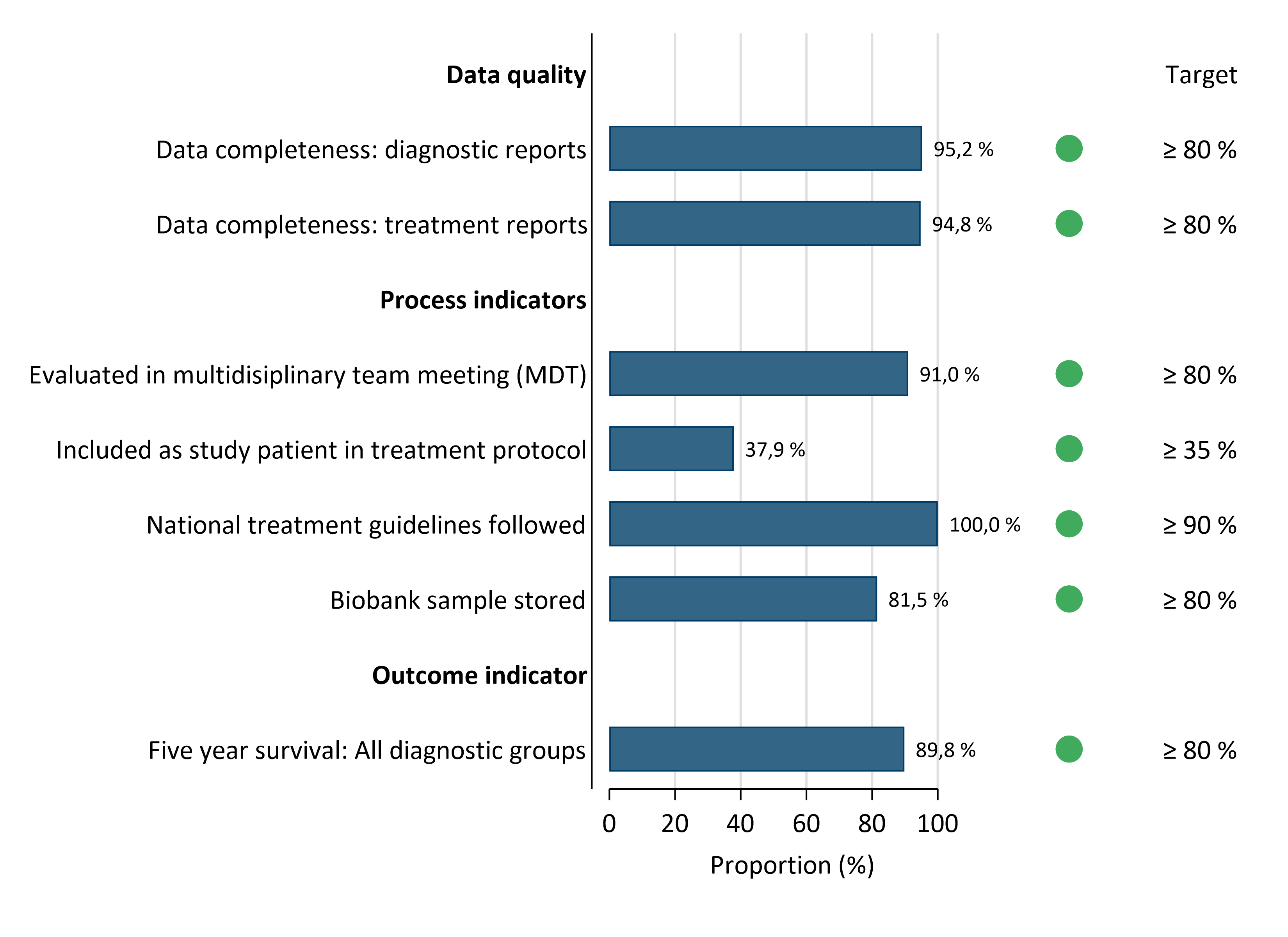
Reliable and complete national registry data are essential to ensuring high-quality childhood cancer care. Cancer in children and adolescents represents less than 1 % of all cancer cases in Norway. Furthermore, paediatric cancer comprises 12 main diagnostic groups, each with multiple subgroups, resulting in very small patient numbers for each diagnosis—ranging from 0 to 10 cases annually in the smallest groups. Diagnostic procedures, staging, and treatment largely follow international protocols or treatment regimes. Notably, 37,9 % of paediatric cancer patients are enrolled in clinical study protocols, the majority of which are treatment studies conducted in accordance with international Good Clinical Practice (GCP) standards. This proportion is exceptionally high and is rarely seen in adult oncology.
Diagnostic evaluation and the majority of treatment are provided at one of four regional paediatric oncology centres: Oslo University Hospital, Haukeland University Hospital, St. Olav’s Hospital, and the University Hospital of North Norway. Regular multidisciplinary team (MDT) meetings are held at all centres, ensuring adherence to national guidelines and equal access to high-quality treatment regardless of the patient’s place of residence.
The annual report of the Childhood Cancer Registry also enables comparison of Norwegian outcomes with those of other Nordic and European countries. Several cancer types demonstrate long-term survival rates exceeding 90 %, including retinoblastoma, acute lymphoblastic leukaemia, lymphomas, low-grade central nervous system tumours, and germcell tumours. Other diagnoses remain more challenging, with survival rates ranging from 60–80 %, such as bone tumours, acute myeloid leukaemia, and certain brain tumours. Overall survival for childhood and adolescent cancer in Norway is currently 89,8 %, which is comparable to outcomes reported by countries with similar healthcare systems.
In addition to the continuous effort to improve prognosis and survival, increasing attention is being given to quality of survival and the reduction of late effects. Today, as many as four out of five survivors of childhood cancer experience late effects of varying severity. This year’s report highlights that more than 7,000 individuals in Norway are currently living after having been diagnosed with cancer before the age of 18. Ensuring lifelong medical follow-up and appropriate long-term care for these individuals is of paramount importance.